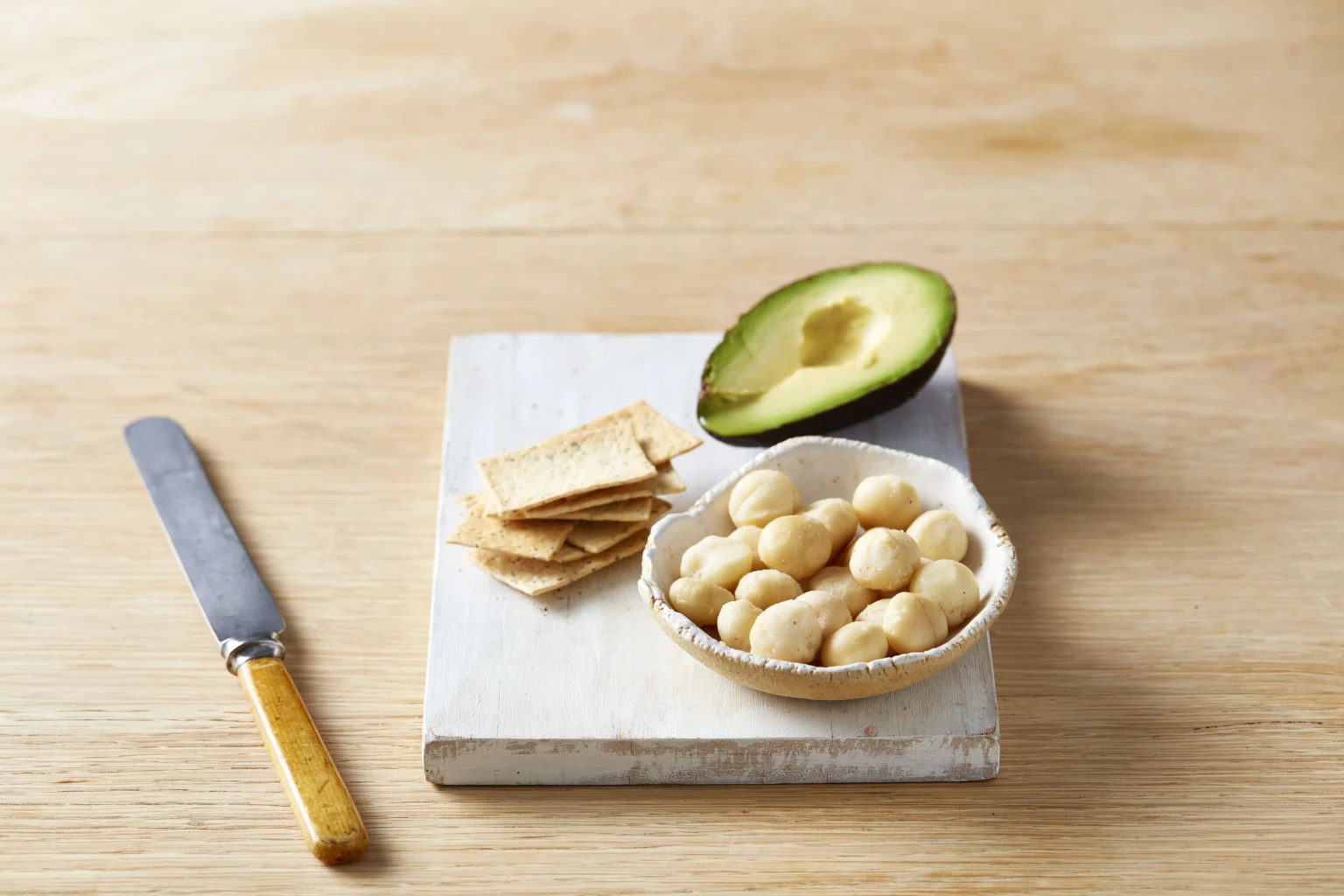
Gone are the days of believing that low fat is better. These days we enjoy the mouthfeel and taste that fat brings to our food, as well as the many nutritional benefits.
Fat helps with absorption of fat-soluble nutrients such as vitamin E and also helps to keep us feeling full so we don’t eat more than our bodies need. However, there are several types of fat and not all of them are equally beneficial. When we talk about ‘good’ fats we usually mean unsaturated ones.
Macadamia nuts are the number one tree nut source of the ‘good’ monounsaturated fats, which together with polyunsaturated fats, are associated with supporting heart health and reducing the risk of heart disease102,109,110.
‘Good’ vs ‘bad’ fats
But what’s the difference between ‘good’ and ‘bad’ fats? And what does it mean for a fat to be monounsaturated? The difference lies in the chemical structure of the fat. Monounsaturated fats contain one double bond in the carbon chain that forms the backbone of the fatty acid. This single bond means that monounsaturated fats are very stable and don’t oxidise easily. Oxidation can damage cells111, which is why antioxidants are so important, but the fats in Australian macadamias are naturally more resistant to this process.
The role of ‘good’ fats in overall health
Macadamias contain predominantly monounsaturated fats, with smaller amounts of polyunsaturated fats. The main monounsaturated fats are omega 7 and omega 9, while the polyunsaturated fats include a balance of omega 3 and omega 6. Together, these healthy fats support heart health, help maintain healthy cholesterol levels and assist the body in absorbing fat-soluble vitamins and other essential nutrients. This naturally balanced fat profile makes macadamias a valuable addition to a healthy diet, and enjoying a handful each day is a simple and satisfying way to increase intake of these beneficial fats.

 English
  Chinese